


Motorcycle Battery Manufacturing Process
15 Steps from Lead to Sealed Battery
Motorcycle battery manufacturing transforms lead into compact, sealed power sources that start engines in an instant. From grid casting and paste mixing to AGM wrapping, GEL electrolyte preparation, electrolyte filling and valve-regulated formation, every stage is engineered for precision and repeatability, so every battery delivers reliable starting power and long service life for motorcycles, scooters and electric two-wheelers.
Quality is built in at each step, not inspected in at the end. Our Jiangxi factory combines automated production equipment with strict process controls, delivering sealed motorcycle batteries that meet the demands of OEM manufacturers, distributors and importers alike.

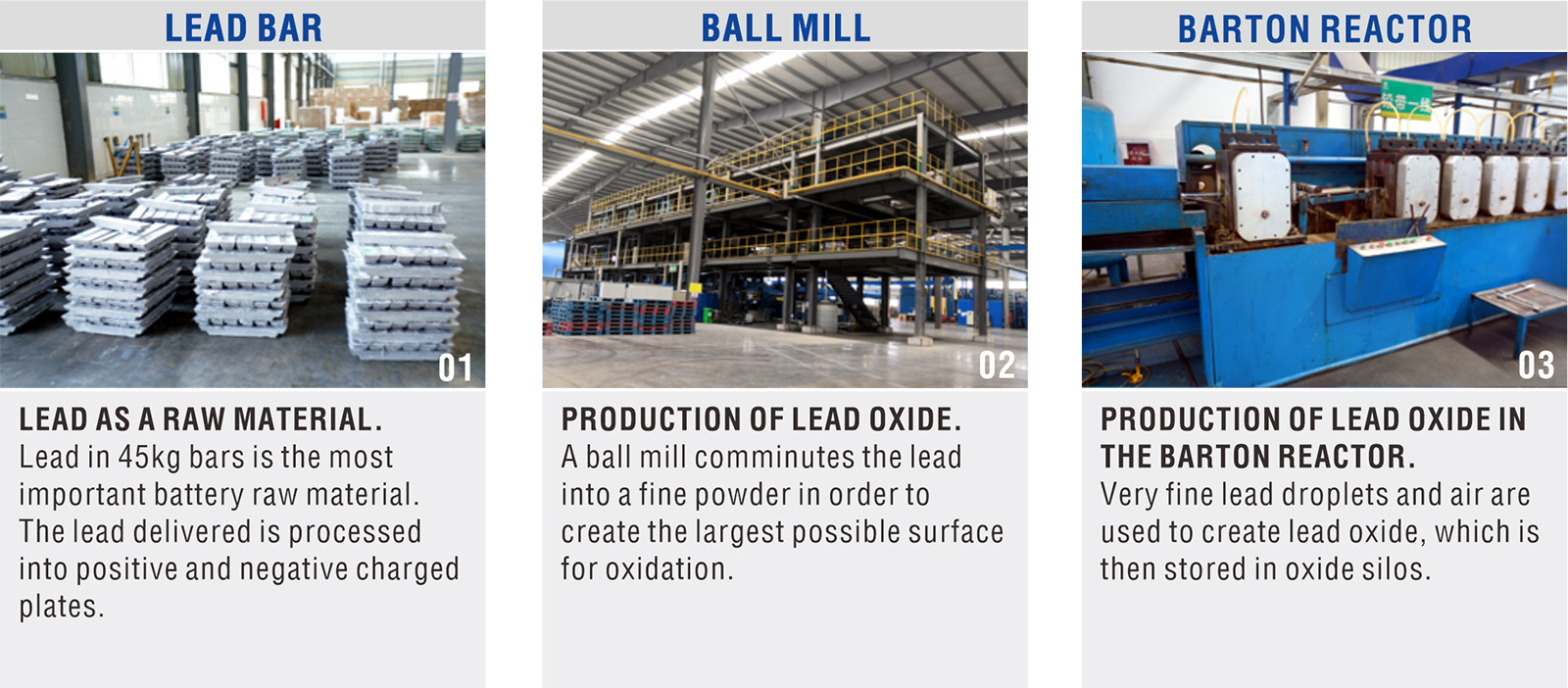
LEAD AS A RAW MATERIAL
Lead in 45 kg bars is the most important raw material for motorcycle batteries. The delivered lead is processed into positive and negative plates.
PRODUCTION OF LEAD OXIDE
A ball mill comminutes the lead into a fine powder to create the largest possible surface for oxidation.


PRODUCTION OF LEAD OXIDE IN THE BARTON REACTOR
Very fine lead droplets and air are used to create lead oxide, which is then stored in oxide silos.
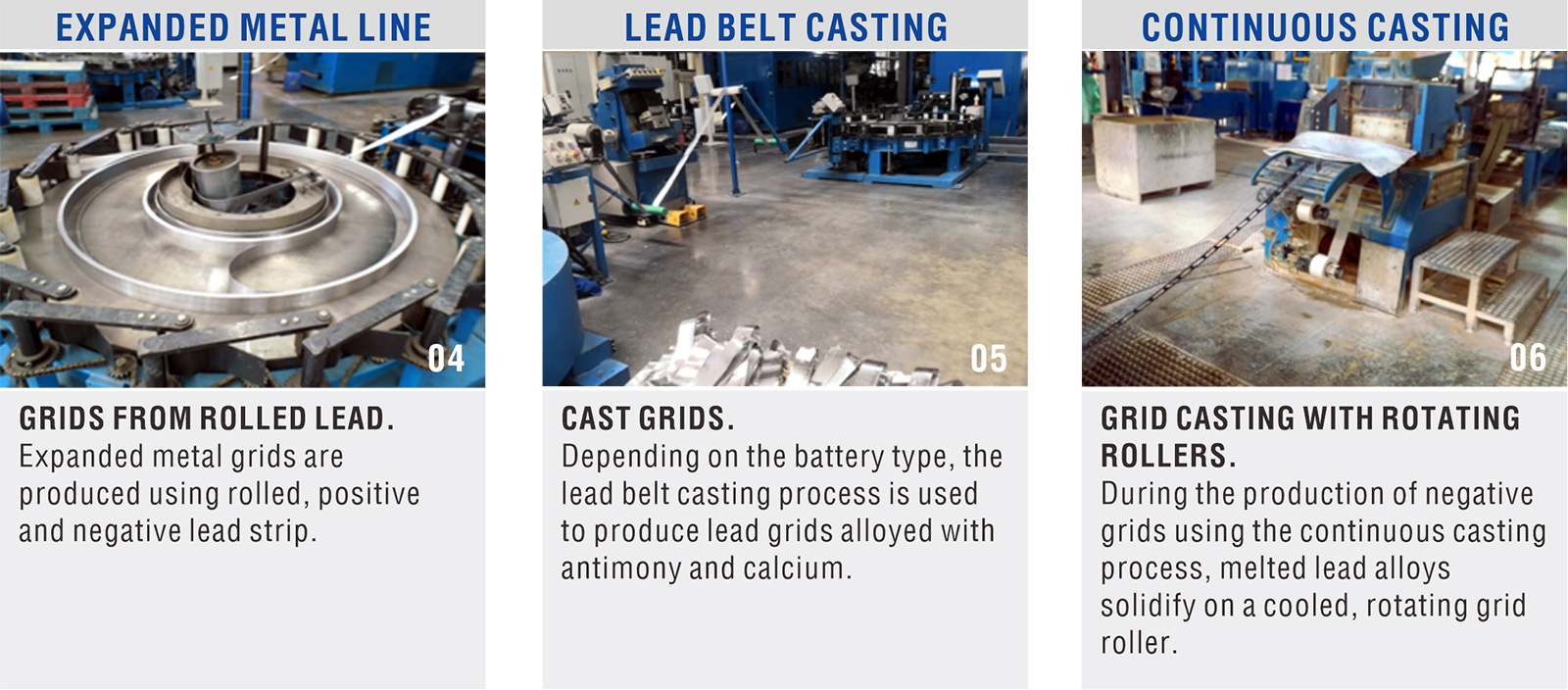
GRID CASTING
Motorcycle battery grids are cast from lead-calcium alloys in compact, thin-wall designs that save space and weight while delivering the high cranking current a motorcycle needs.


PASTE MIXING
Positive and negative lead pastes are mixed separately with different formulations, with density and consistency controlled for high-rate discharge and reliable starting performance.
PASTING AND CURING
The pastes are applied to the grids by automatic pasting machines. The pasted plates are then cured under controlled temperature and humidity to build the active material structure.


PLATE FORMATION
Cured plates are electrochemically formed to convert the paste into active material with the required capacity and voltage characteristics.
PLATE DRYING
Formed plates are thoroughly dried under controlled conditions, preparing them for the AGM or GEL assembly lines.


AGM SEPARATOR AND GEL PREPARATION
Dried plates are wrapped with microporous AGM separators for the AGM SMF and AGM MF series, while the GEL SMF series uses a thixotropic silica-gel electrolyte. Both routes lead to sealed, maintenance-free motorcycle batteries.
GROUP STACKING AND BURNING
Wrapped positive and negative plates are stacked alternately into compact plate groups, and the lugs are welded to cast-on straps to connect the cells.


CONTAINER INSERTION AND SEALING
Plate groups are inserted into the battery container, and the cover is heat-sealed to the container for a tight, leak-proof enclosure that withstands the vibration of daily riding.
ELECTROLYTE FILLING
AGM batteries receive a precisely measured amount of electrolyte absorbed by the separators, while GEL batteries are filled with liquid gel that later solidifies. The sealed design makes the battery spill-proof and position-independent.


FORMATION AND ACTIVATION
Assembled batteries are charged in a controlled formation process: the gel sets and solidifies inside GEL batteries, while AGM batteries complete valve-regulated formation with internal oxygen recombination. DZM deep-cycle types receive formation cycles matched to electric two-wheeler duty.
VALVE INSTALLATION AND TESTING
Pressure-relief valves are installed to regulate internal gas pressure. Every battery undergoes cold cranking amp (CCA), capacity, vibration, leakage and open-circuit voltage testing to confirm reliable starting under real riding conditions.


PACKAGING AND DELIVERY
Tested batteries are labeled, coded, packed with vibration-safe packaging and dispatched in popular JIS/YTX sizes to OEM customers, distributors and importers worldwide.
From raw lead to a sealed, fully tested motorcycle battery, all 15 steps serve one goal - reliable starting power you can count on. Explore our motorcycle battery range to see the result: GEL SMF, AGM SMF, AGM MF and DZM series, each engineered for dependable performance on the road.